Dossier 06 · People
People
The leaders of the UPC and its army, almost all of whom died violently; the French and Cameroonian officials and officers who directed the war; and some of those who have kept its memory.
The nationalists
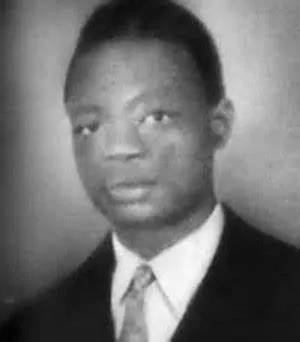
More photographs c. 1913 – 1958
Ruben Um Nyobè
Secretary-general of the UPC
A Bassa clerk and trade unionist from the Sanaga-Maritime, called Mpodol, “the one who speaks for us”. He led the UPC from 1948, argued Cameroon’s case at the United Nations, and favoured legal and non-violent means until the ban forced the movement underground. Killed by a French-led patrol in 1958.
Sources · Mbembe 1996Deltombe, Domergue & Tatsitsa 2011AFP, 27 Dec 2019
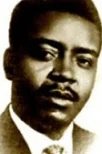
More photographs 1925 – 1960
Félix-Roland Moumié
President of the UPC
A doctor, president of the UPC and its most radical voice. In exile after 1955, he sought arms and support in Cairo, Conakry and Accra. Poisoned with thallium in Geneva in October 1960 by William Bechtel, an agent of the French secret service; he died on 3 November.
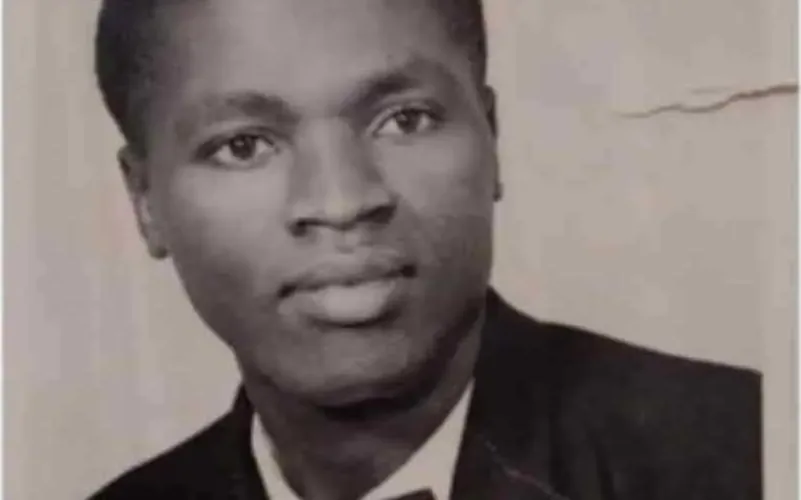
More photographs 1924 – 1971
Ernest Ouandié
Vice-president of the UPC, leader of the ALNK
A Bamiléké schoolteacher who became vice-president of the UPC. He returned from exile in 1961 to lead the armed struggle in the West and the Mungo, and held out for almost ten years. Captured in 1970, he was shot in public in Bafoussam on 15 January 1971, with two comrades, Raphaël Fotsing and Gabriel Tabeu.
Sources · Deltombe, Domergue & Tatsitsa 2011AFP, 27 Dec 2019Camer.be, 15 Jan 2024
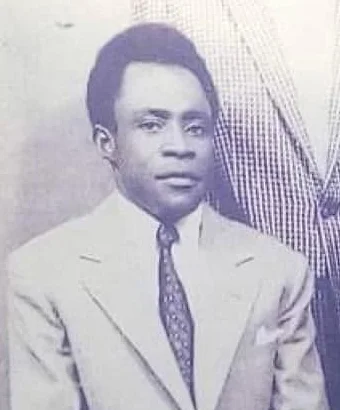
More photographs 1924 – 1964
Abel Kingué
Vice-president of the UPC
A Bamiléké founder-member and vice-president of the UPC, who led the exiled leadership from Accra. He died of illness in Cairo in 1964, the only one of the movement’s historic leaders not to die a violent death.
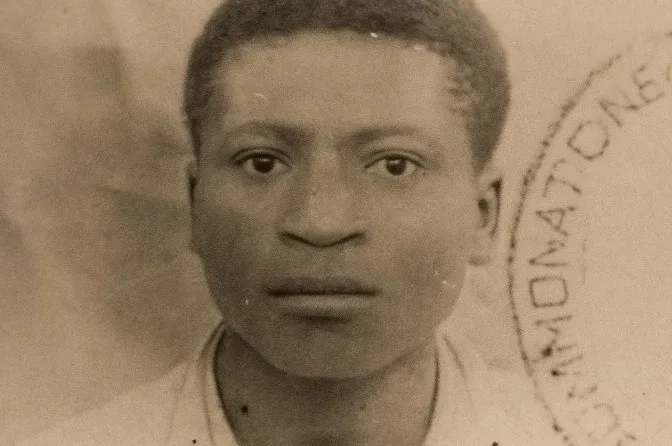
More photographs ? – 1961
Martin Singap
Chief of staff of the ALNK
Organiser of the Armée de libération nationale du Kamerun in the Bamiléké region and its first chief of staff. Hunted down and killed in 1961.
? – 1960
Paul Momo
ALNK commander
One of the main ALNK commanders in the Bamiléké region. Killed in 1960; France acknowledged its responsibility in his death in 2025.
Sources · Macron letter, 2025
? – 1960
Jérémie Ndéléné
ALNK commander
ALNK commander in the Bamiléké region. Killed in 1960 in an operation under French command, as France acknowledged in 2025.
Sources · Macron letter, 2025
? – 1958
Isaac Nyobè Pandjock
Military chief of the CNO
Commander of the UPC’s armed organisation in the Sanaga-Maritime. Killed in June 1958 in an operation under French command.
Sources · Macron letter, 2025Deltombe, Domergue & Tatsitsa 2011
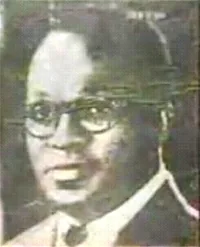
More photographs 1930 – 1966
Castor Osendé Afana
Economist and UPC leader
One of the first Africans to earn a doctorate in economics in France. He returned from exile in 1965 to open a maquis in the south-east and was killed there in March 1966.
Sources · Deltombe, Domergue & Tatsitsa 2011
1936 – 2020
Ngouo Woungly-Massaga
Commander of the ALNK’s second front, leader of the UPC
Known as Commandant Kissamba. A former president of the Kamerun students’ union, the UNEK, he became Ernest Ouandié’s close collaborator as the UPC’s administrative secretary and commanded the second front of the ALNK. After Osendé Afana was killed in March 1966 he became the UPC’s main leader, and he was secretary-general of the clandestine party from 1982 to 1990. He died in Yaoundé on 17 October 2020.
Sources · Cameroon Tribune, 19 Oct 2020Camer.be, 17 Oct 2020
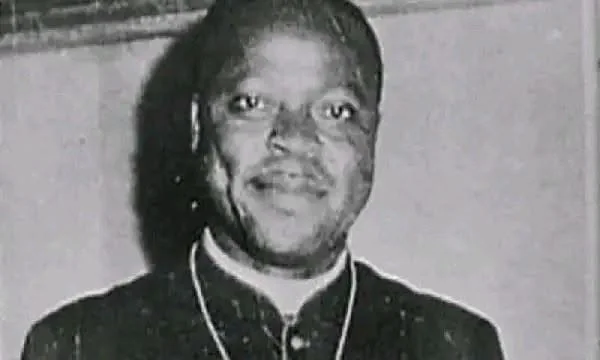
More photographs 1926 – 1992
Mgr Albert Ndongmo
Catholic bishop of Nkongsamba
A Bamiléké bishop who had contacts with Ouandié, at first with the government’s knowledge. Tried with him in 1970–71 and sentenced to death; the sentence was commuted. Released after several years, he lived the rest of his life in exile in Canada.
Sources · Deltombe, Domergue & Tatsitsa 2011
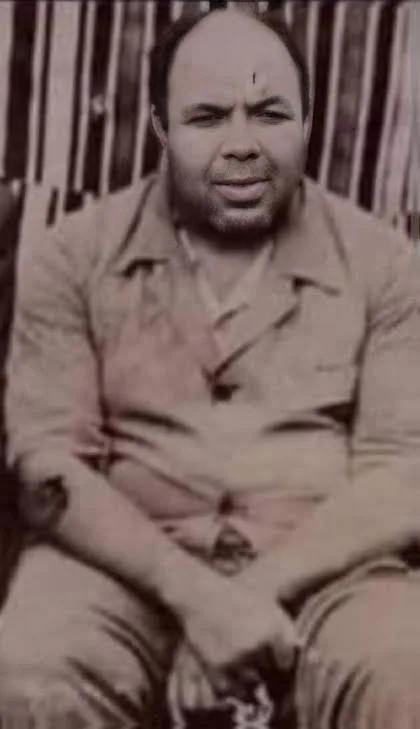
More photographs d. 1957 or 1959
Jacob Fossi
UPC militant in Bafoussam
A UPC member from Bafoussam, taken from his family by the colonial authorities in June 1956. French soldiers threw him from the Métché falls and, as he fell, dragged one of his executioners with him; his daughter says this saved the other nationalists due to die that night. She dates his death to May 1957, Kamerun! to September 1959. She learned his story only at fifty, and found no trace of it in the French colonial archives at Vincennes.
The colonial and Cameroonian state
Roland Pré
High Commissioner, 1954–1956
French High Commissioner from December 1954 to April 1956. He chose confrontation with the UPC, put down the riots of May 1955 and obtained the decree banning the party.
Sources · Deltombe, Domergue & Tatsitsa 2011
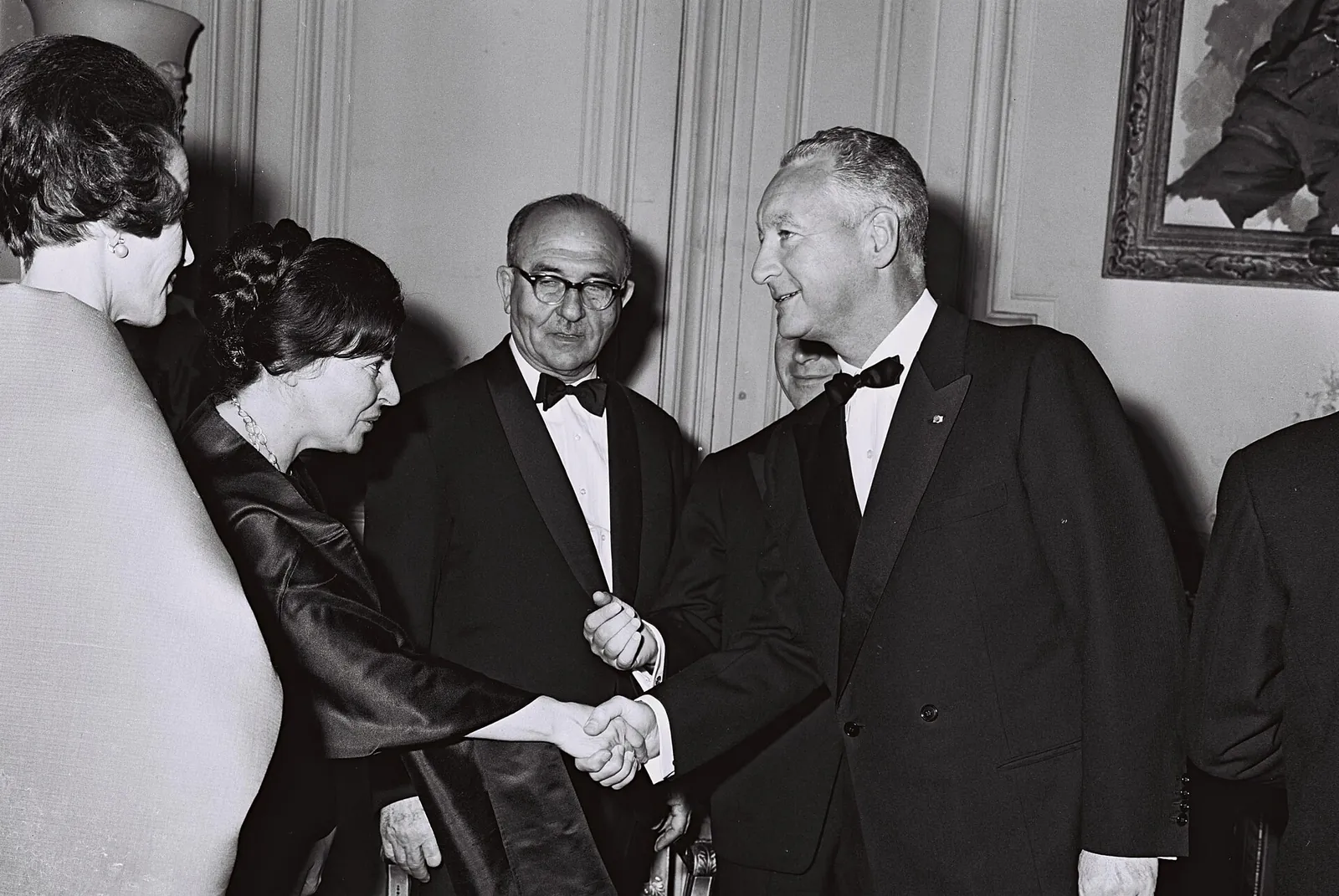
Fritz Cohen, Government Press Office (Israel) · Public domain More photographs 1916 – 2007
Pierre Messmer
High Commissioner, 1956–1958
High Commissioner from April 1956 to January 1958. He prepared the territory’s autonomy without the UPC and created the ZOPAC in the Sanaga-Maritime. Later French minister of the armed forces and prime minister (1972–1974). He spoke about the war in the 2007 documentary.
Sources · Deltombe, Domergue & Tatsitsa 2011Le Roy & Osouf 2007
Jean Lamberton
Commander of the ZOPAC
A French officer trained in the doctrine of revolutionary war. He commanded the ZOPAC from December 1957 and, in March 1960, published an article presenting the Bamiléké as the problem of independent Cameroon.
Max Briand
French general, commander in the West
Commanded the French forces engaged in the Bamiléké region around independence. His own figure for the dead of 1960 was “a little over 20,000”.
Sources · Deltombe, Domergue & Tatsitsa 2011
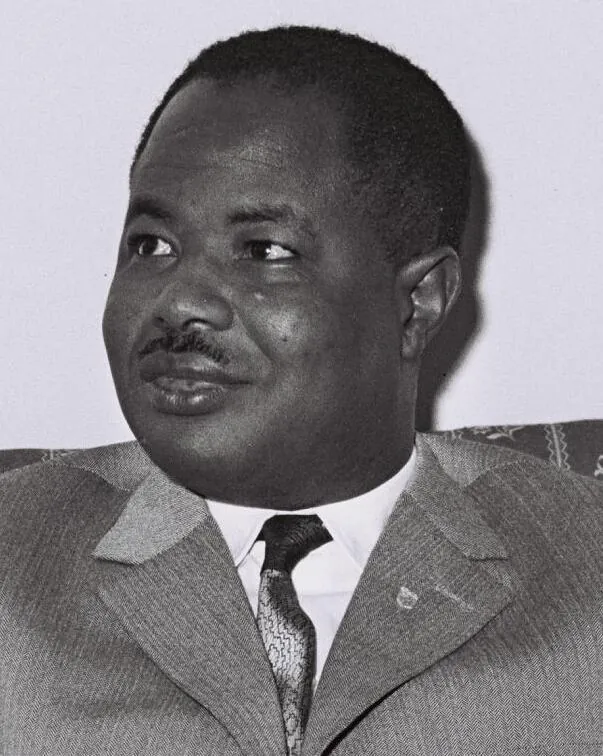
Moshe Pridan, Government Press Office (Israel) · Public domain More photographs 1924 – 1989
Ahmadou Ahidjo
Prime minister 1958, president 1960–1982
Brought to power with French support in 1958, he led Cameroon to independence and continued the war against the UPC with French help. He built a single-party state in which the war could not be spoken of.
Sources · Deltombe, Domergue & Tatsitsa 2011
1913 – 1997
Jacques Foccart
De Gaulle’s adviser for African affairs
From the Élysée, he ran France’s networks in its former colonies, the system later called “Françafrique”. Cameroon was one of its first theatres.
William Bechtel
SDECE agent, Moumié’s poisoner
An agent of the SDECE, France’s foreign intelligence service, then in his sixties. Passing himself off as a journalist and a friend, he dined with Félix-Roland Moumié in Geneva in October 1960; Moumié died of thallium poisoning on 3 November. Bechtel took refuge in France under the protection of the services. In 1980 the Geneva courts dismissed the case despite the evidence against him, and the file has since been impossible to find.
Max Bardet
French army helicopter pilot, 1962–1964
Flew helicopters for the French army in Cameroon from 1962 to 1964. In his memoir O.K. Cargo! (1988) he describes massacres in the Bamiléké region that he says he took part in: villages razed, bodies thrown into the Noun, people shot whatever their age or sex. He puts the dead at 300,000 to 400,000, a figure no archive has confirmed. The authors of Kamerun! long doubted he existed before tracing him; in 2016, on France 24, he said his superiors had told him to forget his operations in Cameroon.
Sources · Bardet & Thellier 1988Journal du Cameroun, 13 Oct 2016
Witnesses and memory
Mathieu Njassep
ALNK veteran
Joined the ALNK in 1960 at 21 and became Ouandié’s secretary. Sentenced to death, he escaped. He has spent his later life testifying: “If France does not recognise it was wrong, we won’t be able to forgive it.”
Sources · AFP, 27 Dec 2019AFP, 28 Jan 2025
Karine Ramondy
Historian, head of the commission’s research team
French historian who led the 14 French and Cameroonian historians of the commission’s research team, whose report was published in 2025.
Sources · Commission France–Cameroun 2025JusticeInfo.net 2025
Blick Bassy
Musician, head of the commission’s public-history team
Cameroonian singer who co-chaired the commission, in charge of its work on memory and transmission to the public.
Sources · JusticeInfo.net 2025