Dossier 10 · Library
Library: books, films and sources
The books and films to read and watch first, followed by every source this site cites, with a note on what each one covers.
Books
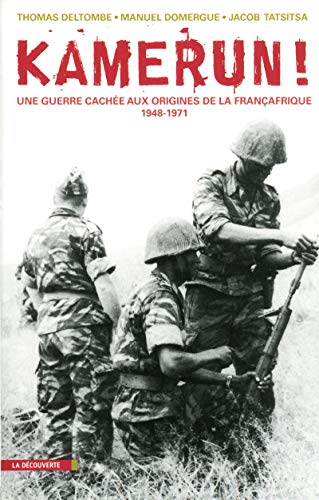
Kamerun !
Une guerre cachée aux origines de la Françafrique (1948–1971)
Thomas Deltombe, Manuel Domergue, Jacob Tatsitsa · 2011 · In French
The book that broke the silence: a reconstruction of the war, in more than 700 pages, from French military and diplomatic archives and dozens of interviews. The standard reference.
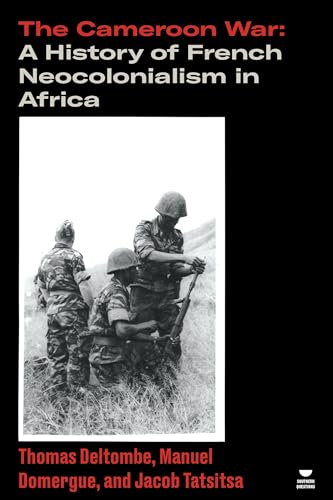
On AmazonThe Cameroon War
A History of French Neocolonialism in Africa
Thomas Deltombe, Manuel Domergue, Jacob Tatsitsa (tr. David Broder) · 2025 · In English
A shorter, more accessible version of Kamerun!, and the one translated into English: The Cameroon War: A History of French Neocolonialism in Africa, translated by David Broder (London: Verso, 2025).
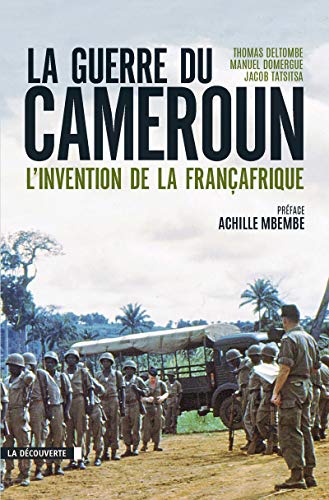
On AmazonLa Guerre du Cameroun
L’invention de la Françafrique
Thomas Deltombe, Manuel Domergue, Jacob Tatsitsa · 2016 · In French
A shorter, more accessible version of Kamerun!, and the one translated into English: The Cameroon War: A History of French Neocolonialism in Africa, translated by David Broder (London: Verso, 2025).
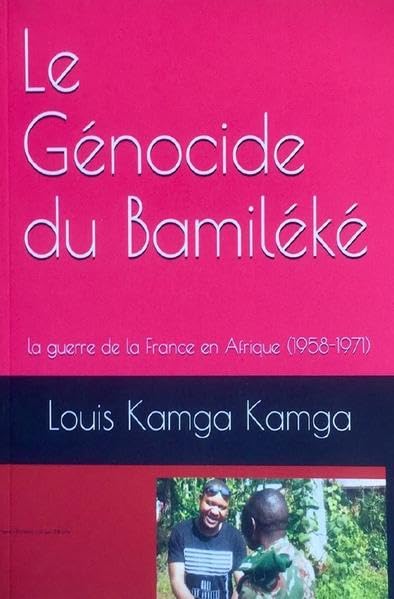
On AmazonLe Génocide du Bamiléké
La Guerre de la France en Afrique (1958–1971)
Louis Kamga Kamga · 2022 · In French
Louis Kamga Kamga’s book, in French, on France’s war against the Bamiléké from 1958 to 1971. Published in paperback and as an ebook.
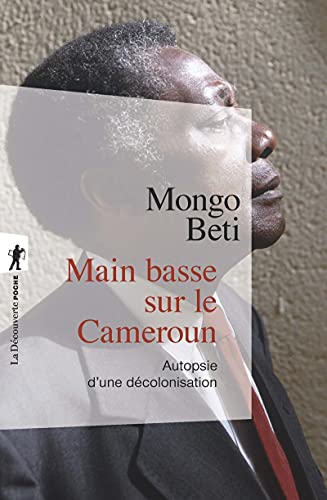
On AmazonMain basse sur le Cameroun
Autopsie d’une décolonisation
Mongo Beti · 1972 · In French
The novelist Mongo Beti’s indictment of the Ahidjo regime and of French policy, written after the execution of Ernest Ouandié. Banned in France on publication.
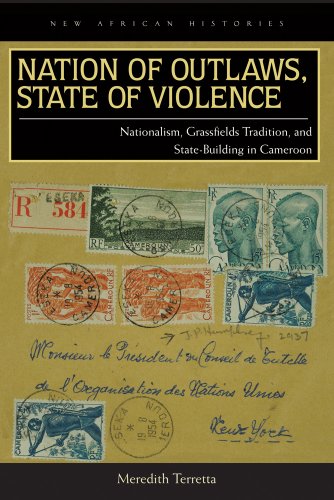
On AmazonNation of Outlaws, State of Violence
Nationalism, Grassfields Tradition, and State Building in Cameroon
Meredith Terretta · 2014 · In English
A history of the UPC in the Bamiléké Grassfields and in exile, and of how chieftaincy, land and nationalism were bound together.
On AmazonRadical Nationalism in Cameroun
Social Origins of the U.P.C. Rebellion
Richard A. Joseph · 1977 · In English
The classic English-language study of the UPC: who joined it, why, and how it became an armed movement.
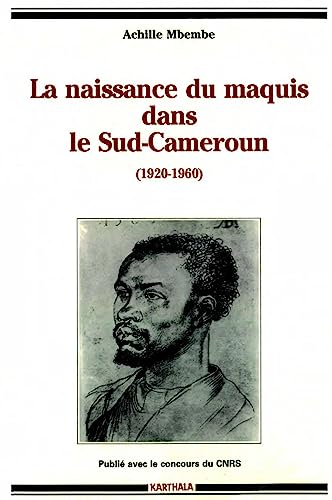
On AmazonLa Naissance du maquis dans le Sud-Cameroun
1920–1960
Achille Mbembe · 1996 · In French
Achille Mbembe’s history of the nationalist maquis in Bassa country (the Sanaga-Maritime), and of Ruben Um Nyobè’s political thought.
On AmazonFemmes bamiléké au maquis
Cameroun (1955–1971)
Léonard Sah · 2008 · In French
Léonard Sah’s book, in French, on Bamiléké women in the maquis during the war of 1955–1971. The author is a historian at the University of Yaoundé.
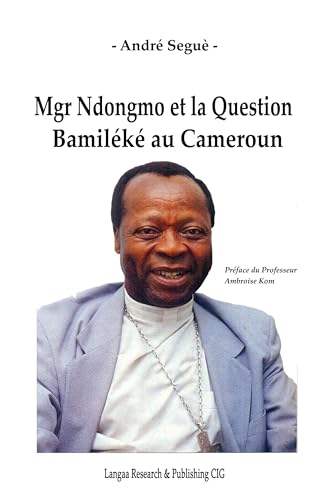
On AmazonMgr Ndongmo et la Question Bamiléké au Cameroun
André Seguè · 2022 · In French
Abbé André Seguè’s book on Mgr Albert Ndongmo, bishop of Nkongsamba, and the “Bamiléké question” in Cameroon. The author is a priest of the diocese of Bafoussam.
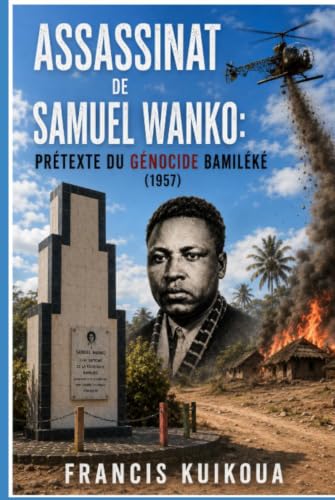
On AmazonAssassinat de Samuel Wanko
Prétexte du génocide bamiléké (1957)
Francis Kuikoua · 2026 · In French
Francis Kuikoua’s book, in French, on the killing of Samuel Wanko, the young Bamiléké deputy murdered in December 1957, which the author presents as the pretext for the genocide of the Bamiléké.
On AmazonLa France au Cameroun, 1945–1971
Rapport de la Commission « Recherche »
Karine Ramondy (dir.) · 2025 · In French
The report of the joint commission of 14 French and Cameroonian historians set up by Emmanuel Macron and Paul Biya. About 1,000 pages, based on declassified French archives and around a hundred interviews; handed over in January 2025. See vol. 2, pp. 641–644 for emergency law and internment; pp. 902–904 for testimony on sexual violence; pp. 936 and 940–941 for the reported 2022 complaint, the commission’s discussion of genocidal intent, and possible war crimes and crimes against humanity.

Films
2007 · 52 min
Cameroun, autopsie d’une indépendance
Gaëlle Le Roy, Valérie Osouf · France 5 / Program 33
The first television documentary on the war, with historians, survivors and Pierre Messmer himself.
All sources
Commission France–Cameroun 2025 Report
Karine Ramondy (dir.), La France au Cameroun, 1945–1971. Rapport de la Commission « Recherche » sur le rôle et l’engagement de la France dans la lutte contre les mouvements indépendantistes et d’opposition au Cameroun de 1945 à 1971. Paris : Hermann, 2025.
The report of the joint commission of 14 French and Cameroonian historians set up by Emmanuel Macron and Paul Biya. About 1,000 pages, based on declassified French archives and around a hundred interviews; handed over in January 2025. See vol. 2, pp. 641–644 for emergency law and internment; pp. 902–904 for testimony on sexual violence; pp. 936 and 940–941 for the reported 2022 complaint, the commission’s discussion of genocidal intent, and possible war crimes and crimes against humanity.
OpenDeltombe, Domergue & Tatsitsa 2011 Book
Thomas Deltombe, Manuel Domergue et Jacob Tatsitsa, Kamerun ! Une guerre cachée aux origines de la Françafrique (1948–1971). Paris : La Découverte, 2011.
The book that broke the silence: a reconstruction of the war, in more than 700 pages, from French military and diplomatic archives and dozens of interviews. The standard reference.
Deltombe, Domergue & Tatsitsa 2016 Book
Thomas Deltombe, Manuel Domergue et Jacob Tatsitsa, La Guerre du Cameroun. L’invention de la Françafrique (1948–1971). Paris : La Découverte, 2016.
A shorter, more accessible version of Kamerun!, and the one translated into English: The Cameroon War: A History of French Neocolonialism in Africa, translated by David Broder (London: Verso, 2025).
Joseph 1977 Book
Richard A. Joseph, Radical Nationalism in Cameroun: Social Origins of the U.P.C. Rebellion. Oxford: Clarendon Press, 1977.
The classic English-language study of the UPC: who joined it, why, and how it became an armed movement.
Mbembe 1996 Book
Achille Mbembe, La Naissance du maquis dans le Sud-Cameroun (1920–1960). Histoire des usages de la raison en colonie. Paris : Karthala, 1996.
Achille Mbembe’s history of the nationalist maquis in Bassa country (the Sanaga-Maritime), and of Ruben Um Nyobè’s political thought.
Terretta 2014 Book
Meredith Terretta, Nation of Outlaws, State of Violence: Nationalism, Grassfields Tradition, and State Building in Cameroon. Athens: Ohio University Press, 2014.
A history of the UPC in the Bamiléké Grassfields and in exile, and of how chieftaincy, land and nationalism were bound together.
Kamga 2022 Book
Louis Kamga Kamga, Le Génocide du Bamiléké : la Guerre de la France en Afrique (1958–1971). Berlin : epubli, 2022.
Louis Kamga Kamga’s book, in French, on France’s war against the Bamiléké from 1958 to 1971. Published in paperback and as an ebook.
Sah 2008 Book
Léonard Sah, Femmes bamiléké au maquis : Cameroun (1955–1971). Paris : L’Harmattan, 2008.
Léonard Sah’s book, in French, on Bamiléké women in the maquis during the war of 1955–1971. The author is a historian at the University of Yaoundé.
Seguè 2022 Book
André Seguè, Mgr Ndongmo et la Question Bamiléké au Cameroun. Bamenda : Langaa RPCIG, 2022.
Abbé André Seguè’s book on Mgr Albert Ndongmo, bishop of Nkongsamba, and the “Bamiléké question” in Cameroon. The author is a priest of the diocese of Bafoussam.
Kuikoua 2026 Book
Francis Kuikoua, Assassinat de Samuel Wanko : prétexte du génocide bamiléké (1957).
Francis Kuikoua’s book, in French, on the killing of Samuel Wanko, the young Bamiléké deputy murdered in December 1957, which the author presents as the pretext for the genocide of the Bamiléké.
Konings 2008 Article
Piet Konings, “Autochthony and Ethnic Cleansing in the Post-Colony: The 1966 Tombel Disturbances in Cameroon,” International Journal of African Historical Studies 41, no. 2 (2008): 203–222.
A historical study of the violence against Bamiléké migrants at Tombel, its local political context, land disputes and longer roots. It treats the disturbances as a distinct postcolonial episode, not as a French military operation.
OpenMongo Beti 1972 Book
Mongo Beti, Main basse sur le Cameroun. Autopsie d’une décolonisation. Paris : François Maspero, 1972.
The novelist Mongo Beti’s indictment of the Ahidjo regime and of French policy, written after the execution of Ernest Ouandié. Banned in France on publication.
Lamberton 1960 Document
Colonel Jean Lamberton, « Les Bamiléké dans le Cameroun d’aujourd’hui », Revue de défense nationale, n° 178, mars 1960, p. 461–477.
An article by the officer who had commanded the ZOPAC, published in a French military review three months after independence. A primary source for the ethnic framing of the war.
Bardet & Thellier 1988 Book
Max Bardet et Nina Thellier, O.K. Cargo ! La guerre du Cameroun… et autres guerres. Paris : Grasset, 1988.
The memoir of a French helicopter pilot who flew in Cameroon from 1962 to 1964. It is the origin of the highest casualty figures, and historians treat it with great caution.
Verschave 1998 Book
François-Xavier Verschave, La Françafrique. Le plus long scandale de la République. Paris : Stock, 1998.
The book that popularised the word “Françafrique”. It describes the repression in the Bamiléké country as a genocide in which French soldiers took part.
Michel 2007 Article
Marc Michel, article on the Cameroon war in L’Histoire, March 2007.
The historian Marc Michel’s estimate: “several tens of thousands” of dead, most of them after independence.
Droz 2006 Book
Bernard Droz, Histoire de la décolonisation au XXe siècle. Paris : Seuil, 2006.
A general history of decolonisation; it puts the dead of 1955–1959 at about 10,000.
AFP, 28 Jan 2025 Press
AFP, “France responsible for ‘extreme violence’ in Cameroon independence war, report says”, 28 January 2025 (via JusticeInfo.net).
News report on the handover of the commission’s report in Yaoundé.
OpenAFP, 28 janv. 2025 Press
AFP, « Au Cameroun, la longue quête de reconnaissance des victimes de la colonisation française », 28 janvier 2025 (via Le Soleil, Dakar).
Louise Mekah Fossi at the Métché falls, where her father Jacob Fossi was thrown to his death; with the veteran Mathieu Njassep.
OpenCamer.be, 14 sept. 2017 Press
Jacky Moiffo, « Cameroun, Livre : Les profondes blessures d’une chute », Camer.be, 14 septembre 2017 (sur le livre de N. Louise Mekah Fossi, EditAfric, 2017).
On the book by Jacob Fossi’s daughter: his arrest in June 1956 and his death at the Métché falls, which she dates to 9 May 1957, against the September 1959 given in Kamerun!.
OpenBamiléké museum Document
International Museum of the Bamiléké Genocide, run by the La’akam association, Wilkinsburg, Pennsylvania (website).
A museum founded by the Bamiléké diaspora, with an annual commemoration of the martyrs and an archive of survivors’ testimony.
OpenJusticeInfo.net 2025 Press
JusticeInfo.net, “Hour of reckoning for colonial crimes: what legacy for the France-Cameroon commission?”, 2025.
An analysis of the commission’s findings, its position on the word “genocide”, and its recommendations.
OpenMacron letter, 2025 Press
Letter from Emmanuel Macron to Paul Biya, dated 30 July 2025 and made public on 12 August 2025; as reported by Reuters and AFP.
The first official French acknowledgement that France waged a war in Cameroon.
OpenAFP, 27 Dec 2019 Press
AFP, “Survivors tell of France’s ‘dirty war’ in Cameroon independence”, 27 December 2019 (via WION).
Interviews with survivors and veterans in Ékité, Éséka, Douala and the West, on the eve of the sixtieth anniversary of independence.
OpenLe Temps, 2020 Press
Le Temps (Genève), « Indépendances africaines assassinées », 2020.
A Geneva daily on the independence leaders killed around 1960, including Moumié, poisoned in Geneva by William Bechtel, an agent of the SDECE.
OpenJournal du Cameroun, 13 Oct 2016 Press
Bertin Onana, « Guerre du Cameroun : Max Bardet a réellement existé ! », Journal du Cameroun, 13 octobre 2016.
On Max Bardet’s first public testimony, on France 24 in October 2016, and on how the authors of Kamerun! traced him after doubting he existed.
OpenCameroon Tribune, 19 Oct 2020 Press
Yvan Bounoung, « Nécrologie : Woungly Massaga n’est plus », Cameroon Tribune, 19 octobre 2020.
Obituary of Ngouo Woungly-Massaga, “Commandant Kissamba”, in Cameroon’s state daily.
OpenCamer.be, 17 Oct 2020 Press
Le TVG de l’info, « Nécrologie : décès de Woungly-Massaga », Camer.be, 17 octobre 2020.
Obituary giving his command of the ALNK’s second front, his leadership of the UPC after 1966 and his years as secretary-general.
OpenCamer.be, 15 Jan 2024 Press
Paul Moutila, « 15 janvier 1971 : l’exécution d’Ernest Ouandié, chapitre obscur de l’histoire camerounaise », Camer.be, 15 janvier 2024.
On the public execution in Bafoussam of Ernest Ouandié and his two comrades, Raphaël Fotsing and Gabriel Tabeu.
OpenJusticeInfo.net (statements) Press
Ephrem Rugiririza, “Cameroon: Um Nyobè, a hero and symbol of French colonial crimes”, JusticeInfo.net, 13 September 2021.
Quotes François Fillon’s 2009 denial and François Hollande’s 2015 remarks in Yaoundé.
OpenRFI, July 2015 Press
RFI, coverage of François Hollande’s press conference in Yaoundé, 3 July 2015.
Reports Hollande’s words on “tragic episodes” and the repression in the Sanaga-Maritime and the Bamiléké country.
Law 91/022, 1991 Law
Loi n° 91/022 du 16 décembre 1991 portant réhabilitation de certaines figures de l’histoire du Cameroun.
The law that rehabilitated Ruben Um Nyobè, Félix-Roland Moumié and Ernest Ouandié, together with Ahmadou Ahidjo.
Nuremberg Charter 1945 Law
Charter of the International Military Tribunal (Nuremberg), 8 August 1945, Article 6.
Defines war crimes, including the “wanton destruction of cities, towns or villages”, and crimes against humanity.
OpenGeneva Convention IV 1949 Law
Geneva Convention (IV) relative to the Protection of Civilian Persons in Time of War, 12 August 1949, Articles 3 and 33. Ratified by France on 28 June 1951.
Article 3, common to the four Conventions, bans the murder of anyone taking no active part in hostilities, including in internal conflicts. Article 33 prohibits collective penalties, in wars between states and under occupation.
OpenGenocide Convention 1948 Law
Convention on the Prevention and Punishment of the Crime of Genocide, adopted by the UN General Assembly on 9 December 1948, Article II.
The legal definition of genocide in international law.
OpenLe Roy & Osouf 2007 Film
Gaëlle Le Roy et Valérie Osouf, Cameroun, autopsie d’une indépendance. France 5 / Program 33, 2007, 52 min.
The first television documentary on the war, with historians, survivors and Pierre Messmer himself.
Mvom 2023 Book
Jacques Didier Lavenir Mvom, Cameroun 1962, le train de la mort. Paris : L’Harmattan, 2023.
A study of the “death train” of February 1962, with the testimony of a survivor.